Scott Martindale


  by Scott Martindale
  CEO, Sabrient Systems LLC

 Quick note: If you are a financial advisor who would like to see Sabrient portfolios packaged in an ETF wrapper, please drop me an email (or suggest it to your local ETF wholesaler). We have a line-up of active and passive alpha-seeking portfolios and indexes ready to go!

Overview

The January BLS jobs report strengthened while CPI cooled—a match made in heaven for the economy, right? But investors are grappling with what it portends for Fed monetary policy, particularly given the impending changing of the guard at the Fed. That seems to be all the market cares about at the moment. But of course, in the longer term, these trends bode well for lower interest rates and growth in GDP, earnings, and stock prices, particularly given full implementation of the One Big Beautiful Bill Act (OBBBA), which focuses on tax reform, deregulation, energy production, border security, and broad support for the private sector to retake its rightful place as the primary engine of growth via re-privatization, reshoring, and re-industrialization, with much more efficient capital allocation and ROI than government. All told, I think the GDP, jobs, and inflation story suggests room for more rate cuts, as I discuss in detail in my full commentary below.

As I expected, particularly after a third straight strong year for the market, stocks have been more volatile during Q1, with the CBOE Volatility Index (VIX) climbing back above the 20 “fear threshold.” Energy, Basic Materials, high-dividend payers (aka “bond proxies”), defensive sectors Consumer Staples and Telecom, small caps and equal-weight versions of the major indexes have all significantly outperformed the long-time high-flying mega-cap Tech-dominated S&P 500 and Nasdaq 100 that have been so hard to beat for so long.

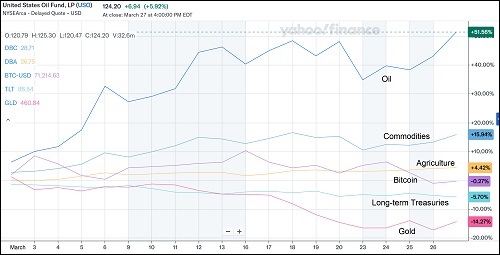
February has been marked by rising volatility plus much wailing and gnashing of teeth as the AI story (big investments now for even bigger returns and productivity growth in the near future) is suddenly being questioned. No doubt, stocks have seen the manifestation of investor worries of disappointing or delayed ROI on the massive capex for AI, as well as a crowding out of other uses for the cash, such as for dividends and share buybacks. In addition, the concern that AI will make all current software/SaaS companies obsolete has cut down most software stocks at the knees. And then we have the impact of Kevin Warsh’s nomination for Fed chair, which initially sent commodities (including surging gold and silver) into a tailspin on expectation of (heaven forbid!) tighter policy, lower debt, and a stronger dollar—which used to be considered good things and signs of a robust economy.

In addition, the macro clouds of uncertainty persist regarding trade deals and tariffs, the intractable Ukraine/Russia war, the Venezuela, Cuba, and Iran situations (which also impact China, Russia, and oil markets broadly), enforcement of immigration law, civil strife in US cities, political polarization, imminent midterm elections, Fed policy uncertainty, a stagnant “no-hire, no-fire” jobs market, signs of consumer distress, another partial government shutdown (or in this case, just the DHS), and rising federal debt now approaching $39 trillion (of which $31 trillion held by the global public)—not to mention the gargantuan total unfunded/underfunded liabilities that comprise guaranteed programs like Social Security, Medicare, employee pensions, and veterans’ benefits (as much as $50-100 trillion), plus over $6 trillion in state and local government debt of which over $2 trillion represents public pension and healthcare liabilities as well as state budget deficits that might eventually need federal bailouts. The states and cities in the worst shape are almost all “blue” due to their onerous tax and regulatory policies and massive nanny-state entitlement programs.

So, is it time to go all-in on these defensive plays? Are we due for another 2022-esque bear market? I think not. I think the core of an equity portfolio still should be US Big Tech stocks, given the entrepreneurial culture of US, disruptive innovation, and world-leading ROI that attract foreign capital, as well as Big Tech’s huge cash stores, wide moats, global scalability, resilient and durable earnings growth, free cash flow, margins. In fact, Bill Ackman’s Pershing Square just announced it increased its holdings in Meta Platforms (META) to $2 billion (10% of investment capital). However, the Big Tech hyperscalers (e.g., Microsoft, Alphabet, Amazon, and Meta) have always been considered “asset-light” with their focus on IP, software, and high ROI on minimal physical infrastructure, but their massive spending on datacenters essentially has transformed them into “asset-heavy,” capital-intensive.

According to the Financial Times, “A total of more than $660 billion is set to be ploughed into chips and data centres this year... The unprecedented infrastructure build-out will force Big Tech executives to choose between stemming capital returns to shareholders, raiding their cash reserves or tapping the bond and equity markets more than previously planned.” This has impacted investor psyches.

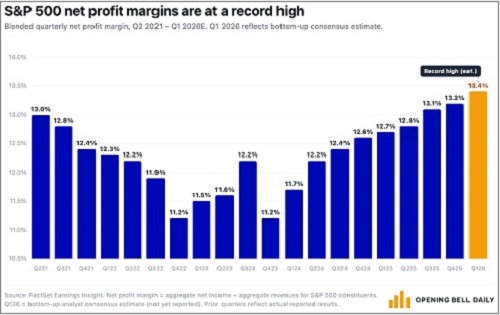
Nevertheless, there has been little deterioration in the fundamental story for the economy and stocks, and in fact the earnings projections for the S&P 500 in CY2026 are pushing upwards of 15% YoY, according to FactSet. Moreover, net margins are now at 10-year highs (and climbing)—and it extends beyond just the Tech sector. Cathie Wood of Ark Invest believes the US has suffered through a “rolling recession” (largely due to high interest rates) that have “evolved into a coiled spring that could bounce back powerfully during the next few years.” Indeed, capital flow already seems be returning to the AI infrastructure plays, including semiconductors, hyperscale cloud providers, and specialized networking, if not the software/SaaS firms, as I discuss in greater depth below.

Still, ever since the market low on 11/20, small and micro-cap indexes have greatly outperformed, as have the S&P 500 High Dividend (SPYD), S&P 500 Equal-Weight (RSP), and the Dow Transports (IYT). Value is doing well, too. So, this market broadening and mean reversion on valuations that is underway should also offer other (and likely better) opportunities among the AI infrastructure builders (datacenters and networking equipment) and power generators (beyond the giants and hyperscalers) from Industrials, Utilities, and Energy sectors, as well as small/mid-caps, value, quality, cyclicals, and equal-weight indexes. In addition, you might consider high-quality homebuilders, regional banks, insurers, energy services, transports, and healthcare/biotech/biopharma companies. Also, falling interest rates and rising liquidity suggest bond-proxy dividend stocks. Select small caps can offer the most explosive growth opportunities even if the small-cap indexes continue to lag the S&P 500. When borrowing costs decline and credit spreads tighten, small caps tend to respond earlier and more robustly than their larger brethren.

Historically, small caps tend to outperform during periods of rising economic growth, cooling inflation, and falling interest rates. Indeed, analysts are expecting a rebound in earnings for the Russell 2000 this year, beyond the healthy expectations for the S&P 500. Keep in mind, while the cap-weight large cap indexes are dominated by Technology, small cap indexes tend toward Industrials, Materials, and Financials (including regional banks), which should benefit from broad-based economic activity, infrastructure spending, and reshoring of supply chains. Moreover, a dovish Fed should support the earnings of the more interest rate-sensitive market segments (like small caps) as well as mortgage lenders, credit card issuers, high-quality regional banks, property & casualty insurers (who hold bonds as claim reserves), homebuilders and suppliers, home improvement firms, title insurance firms, REITs, and automakers/dealers.

But whether the broad indexes finish solidly positive this year may depend upon: 1) liquidity growth, 2) the relative strength of the dollar, 3) the steepness of the yield curve (could the 2-10 spread rise above 100 bps?), 4) the status and outlook on capex for AI and onshoring, and 5) the midterm elections and whether Republicans retain the House. According to economist and liquidity expert Michael Howell of CrossBorder Capital, this stage of the liquidity cycle (slowing liquidity growth) is correlated with falling bond term premia and flattening yield curve—which means Treasury notes and bonds may perform well later in the year. Indeed, given where we are with stability in real interest rates and inflation expectations, including the many disinflationary trends—like AI, automation, rising productivity, falling shelter and energy costs, peace deals, a firmer dollar, and the deflationary impulse from a struggling China—bonds seem ready to return to their historical role as a portfolio diversifier.

After the S&P 500’s terrific bull run over the past three years in which the MAG7 accounted for roughly 75% of the index’s total return, I think this year might see the equal-weight RSP and small cap indexes outperform the SPY, with the SPY gaining perhaps only single-digit percentage. This scenario also might favor strategic beta and active management. Regardless, stock market performance should be dependent upon strong ROI and earnings growth rather than significant multiple expansion. So, rather than the broad passive indexes (which are dominated by growth stocks, Big Tech, and the AI hyperscalers), I think 2026 should be a good year for active stock selection, small caps, and bond-alternative dividend payers—which bodes well for Sabrient’s Baker’s Dozen, Forward Looking Value, Small Cap Growth, and Dividend portfolios.

I go much further into all of this in my full post below, particularly regarding inflation and Fed policy. Overall, my recommendation to investors remains this: Focus on high-quality businesses at reasonable prices, hold inflation and dollar hedges like gold, silver, and bitcoin, and be prepared to exploit any market pullbacks by accumulating high-quality stocks as they rebound, with earnings fueled by massive capex in AI, blockchain, energy, and power infrastructure and factory onshoring, leading to rising productivity, increased productive capacity, and economic expansion. Regarding “high-quality businesses,” I mean fundamentally strong, displaying a history of consistent, reliable, resilient, durable, and accelerating sales and earnings growth, positive revisions to Wall Street analysts’ consensus estimates and a history of meeting/beating estimates, rising profit margins and free cash flow, high capital efficiency (e.g., ROI), solid earnings quality and conservative accounting practices, a strong balance sheet, low debt burden, competitive advantage, and a reasonable valuation compared to its peers and its own history.

These are the factors Sabrient employs in our quantitative models and portfolio selection process. As former engineers, we use the scientific method and hypothesis-testing to build models that make sense. We are best known for our Baker’s Dozen growth portfolio of 13 diverse picks, which is designed to offer the potential for outsized gains. It is packaged and distributed as a unit investment trust (UIT) by First Trust Portfolios—along with three other offshoot strategies for value, dividend, and small cap themes. In fact, the new Q1 2026 Baker’s Dozen portfolio recently launch on 1/20/2026. Also, as small caps and high-dividend payers benefit from falling interest rates and market rotation, the quarterly Sabrient Small Cap Growth and Sabrient Dividend (a growth & income strategy) might be timely investments. Notably, our Earnings Quality Rank (EQR) is a key factor in each of our strategies, and it is also licensed to the actively managed, low-beta First Trust Long-Short ETF (FTLS) as a quality prescreen.

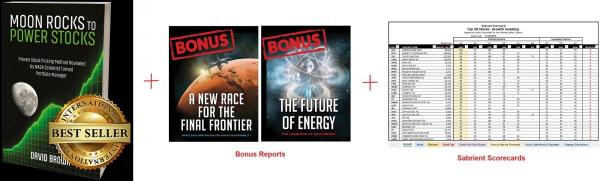
Sabrient founder David Brown reveals the primary financial factors used in our models and his portfolio construction process in his latest book, Moon Rocks to Power Stocks—now an Amazon bestseller—written for investors of any experience level. David describes his path from NASA engineer in the Apollo Program to creating quantitative multifactor models for ranking stocks and building stock portfolios for four distinct investing styles—growth, value, dividend, or small cap.

Here is a link to this post in printable PDF format, where you can also find my latest Baker’s Dozen presentation slide deck. As always, I’d love to hear from you! Please feel free to email me your thoughts on this article or if you’d like me to speak on any of these topics at your event!  Read on….

Scott Martindale


  by Scott Martindale
  CEO, Sabrient Systems LLC

 Overview

Last year nearly brought a third straight 20+% total return for the S&P 500, but alas it fell just short. Looking ahead, the ducks seem to be lining up for more upside in 2026, although leadership should see some rotation. I believe the tailwinds far outweigh the headwinds, and investors seem to be positioning for a strong year for both GDP growth and stocks on continued AI optimism, robust/aggressive capex (led by the MAG7) for AI infrastructure as well as onshoring of strategic manufacturing, looser Fed monetary policy, rising global liquidity, full enactment of the One Big Beautiful Bill Act (OBBBA), tax and interest rate cuts, smaller government, deregulation, re-privatization, re-industrialization, and a potential “peace dividend.”

This should continue to attract foreign capital into the US (“shadow liquidity,” much of which is not counted in M2), cut the deficit-to-GDP ratio, and unleash organic private sector growth, with stock valuations driven by rising earnings rather than multiple expansion. Indeed, January is off to a hot start, led by small caps, and the January Barometer would suggest another solidly positive year for stocks (when the first five trading days of the year are positive, the S&P 500 has historically finished the year higher 85% of the time with an average gain of +15%).

However! This is no guarantee that the S&P 500 necessarily ends the year higher. Valuations on the broad indexes remain stretched (some might say “priced for perfection”), so a lot must go right in a year littered with landmines. Not the least of which, while global liquidity is still rising, its growth rate is slowing—although this is partially offset by rising velocity of money (transactions per dollar in circulation), which in the US is at its highest level since Q4 2019. Furthermore, uncertainties persist regarding trade deals and tariffs, the intractable Ukraine/Russia war, Venezuela invasion and upheaval in Iran (both of which impact China, Russia, and oil markets broadly) rising federal debt, civil strife in US cities, political polarization, midterm elections, Fed policy uncertainty, a weak jobs market, signs of consumer distress, and a government shutdown redux threat.

Nevertheless, stock and bond market volatility remains subdued, forecasts for GDP growth and corporate earnings growth are strong (as the private sector retakes its rightful place as the primary engine of growth, with much more efficient capital allocation and ROI than government), and credit spreads remain near historic lows. In fact, the Financial Times reports that in the first full week of January, corporations secured more than $95 billion in 55 IG bond deals, making it the busiest start to a year on record. Real GDP in Q3 2025 came in at 4.3% annualized growth, and for Q4 2025, the AtlantaFed GDPNow is projecting a whopping 5.3% (!) as of 1/14/26 (yes, that’s a real not nominal number). For Q1 2026, the OBBBA is now fully kicking in.

In addition, the New York Fed’s Global Supply Chain Pressure Index (GSCPI) continues to hover at or below the zero line (i.e., its historical average) and disinflationary trends have resumed, such as the buildout and implementation of Gen AI, automation, and robotics, rising productivity (Q3 2025 came in at a whopping 4.9% growth), falling shelter and energy costs, peace deals (war is inflationary), a deflationary impulse on the world from China (due to its domestic struggles and falling consumer demand), low inflation in Europe (hitting the ECB’s 2% target), increased domestic productive capacity (i.e., “duplicative excess capacity,” in the words of Treasury Secretary Scott Bessent), and a firmer dollar. Also, money market funds (aka cash on the sidelines or “fuel”) now exceed $8 trillion, the highest ever.

Valuations for the broad market indexes have pulled back from their extreme highs but remain elevated, with the forward P/E on the S&P 500 finishing the year at 22.9x and the Nasdaq 100 at 26.3x. DataTrek Research observed that the S&P 500 P/E multiple has increased by +4.2% over the course of the year while the price index gained +16.4%, so the difference of 12.2% is primarily due to rising earnings growth expectations, with analysts now expecting 15% earnings growth for the S&P 500, which would be the highest annual growth rate since 2021. Moreover, the firm observed that the Technology and Financials sectors in particular saw their forward P/E multiples decline while beating earnings growth estimates and performing well. They conclude, “One need not argue for ever-higher PE multiples to be bullish on US large caps. A strong earnings story is more than enough to support an optimistic view.” And it’s not just equities reflecting investor optimism as corporate bond spreads ended the year near historical lows.

It’s been several years of relentless headwinds for small caps, but the fiscal and monetary policy setup is finally looking sufficiently supportive for a mean reversion/catchup. Favorable tax policies, less red tape, cooling inflation, a less aggressive if not yet friendly Fed, and improving credit conditions (including lower rates and tight credit spreads) all bode well especially for small caps, particularly given their domestic focus, higher debt levels, and interest rate sensitivity (with about 65% of their debt being floating rate versus 15% for large caps). According to Oren Shiran of Lazard Asset Management, "The big difference going into 2026 is that we finally are seeing earnings growth come back into small caps."

However, here are some words of caution. While it is historically common for the second year of a presidential term to show strong earnings growth, we may well see some consolidation of gains and rotation into value and cyclical sectors like Industrials and Financials, as well as fields like biotech/biopharma that are successfully leveraging AI for discovery and innovation. But whether the broad indexes finish solidly positive this year may depend upon: 1) liquidity growth, 2) the relative strength of the dollar, 3) the steepness of the yield curve (could the 2-10 spread rise above 100 bps?), 4) the status and outlook on capex for AI and onshoring, and 5) the midterm elections and whether Republicans retain the House.

After the S&P 500’s terrific bull run over the past three years in which the MAG7 accounted for roughly 75% of the index’s total return, I think this year might see the equal-weight RSP outperform the cap-weight SPY, with the SPY gaining perhaps only single-digit percentage. This scenario also might favor strategic beta and active management. So, rather than the broad passive indexes (which are dominated by growth stocks, Big Tech, and the AI hyperscalers), I think 2026 should be a good year for active stock selection, small caps, and bond-alternative dividend payers—which bodes well for Sabrient’s Baker’s Dozen, Forward Looking Value, Small Cap Growth, and Dividend portfolios.

According to economist Michael Howell of CrossBorder Capital, this stage of the liquidity cycle (slowing liquidity growth) is correlated with falling bond term premia and flattening yield curve—which means Treasury notes and bonds may perform well later in the year. Indeed, given where we are with stability in real interest rates and inflation expectations, bonds seem ready to return to their historical role as a portfolio diversifier. Notably, there is record level of short positioning in the 20+ Year Treasury Bonds ETF (TLT) entering the new year, and as Mark Hulbert for MarketWatch opined, “Contrarian investors now believe bonds may outperform both stocks and gold because sentiment toward bonds is unusually pessimistic while optimism for stocks and gold is near historical highs, and history shows markets often rally after extreme pessimism and struggle after peak optimism, suggesting bonds could be a better bet in the months ahead despite strong 2025 performance in stocks and gold.”

In addition, this may favor dividend payers, and industrial metals (like copper, aluminum, cobalt, lithium, platinum, palladium), as well as gold, silver, and bitcoin as hedges against monetary inflation. (This is distinct from CPI and is caused by governments “printing money” to monetize their debt—not to fund new spending but to reduce debt service costs and the debt/GDP ratio.) I also think natural gas and energy stocks could perk up this year.

I go much further into all of this in my full post below, including a review of 2025 relative performance of asset classes, caps, and styles; current valuations, the AI bubble narrative, corporate earnings, GDP, jobs, inflation, and Fed policy. Overall, my recommendation to investors remains this: Don’t chase the highflyers and instead focus on high-quality businesses at reasonable prices, hold inflation and dollar hedges like gold, silver, and bitcoin and be prepared to exploit any market pullbacks—such as by buying out-of-the-money protective put options in advance while VIX is low and then accumulating those high-quality stocks as they rebound, fueled by massive capex in AI, blockchain, infrastructure, energy, and factory onshoring, leading to rising productivity, increased productive capacity (“duplicative excess capacity,” in the words of Treasury Secretary nominee Scott Bessent, would be disinflationary), and economic expansion.

And regarding “high-quality businesses,” I mean fundamentally strong, displaying a history of consistent, reliable, resilient, durable, and accelerating sales and earnings growth, positive revisions to Wall Street analysts’ consensus estimates and a history of meeting/beating estimates, rising profit margins and free cash flow, high capital efficiency (e.g., ROI), solid earnings quality and conservative accounting practices, a strong balance sheet, low debt burden, competitive advantage, and a reasonable valuation compared to its peers and its own history.

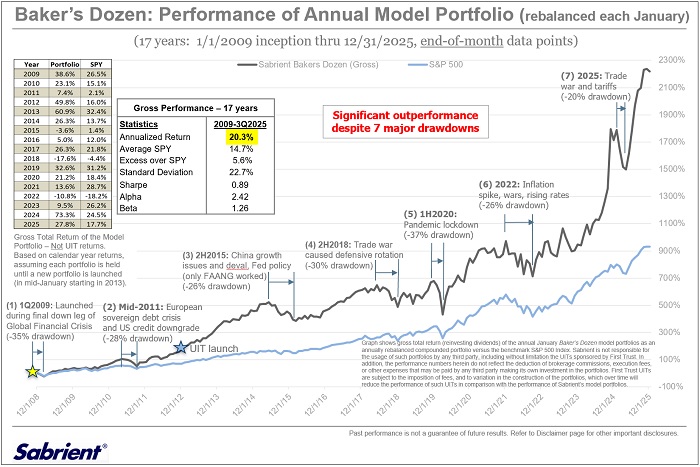
These are the factors Sabrient employs in our quantitative models and portfolio selection process. As former engineers, we use the scientific method and hypothesis-testing to build models that make sense. We are best known for our Baker’s Dozen growth portfolio of 13 diverse picks, which is designed to offer the potential for outsized gains. We have been tracking a Baker’s Dozen Annual Model Portfolio, rebalanced each January since 2009 (during the final stages of the Global Financial Crisis when I first proposed the idea of publishing an annual “Top Picks” list). In mid-January 2013, it began to be packaged and distributed to the financial advisor community as a unit investment trust (UIT) by First Trust Portfolios—along with three other offshoot strategies for value, dividend, and small cap themes—and today it is issued quarterly as a 15-month UIT. In fact, the new Q1 2026 Baker’s Dozen portfolio will launch on 1/20/2026. Until then, the Q4 2025 portfolio remains in primary market.

Below is the 17-year chart comparing the theoretical gross total return of the annual model portfolio versus the S&P 500 from 2009 through 2025. As shown in the table, it reflects an average annual gross total return of +20.3% versus +14.7% for SPY. For calendar year 2025, the Model Portfolio was up +27.8% vs. +17.7% for SPY, following a 2024 gross total return of +73.3% vs. +24.5% for SPY.

Baker's Dozen Annual Model Portfolio chart

Also, because small caps tend to benefit most from lower rates and deregulation, and high dividend payers become more appealing as bond alternatives as interest rates fall, Sabrient’s quarterly Small Cap Growth and Sabrient Dividend (a growth & income strategy) might be timely investments. And notably, our Earnings Quality Rank (EQR) is a key factor in each of our strategies, and it is also licensed to the actively managed, low-beta First Trust Long-Short ETF (FTLS) as a quality prescreen.

Sabrient founder David Brown reveals the primary financial factors used in our models and his portfolio construction process in his latest book, Moon Rocks to Power Stocks: Proven Stock Picking Method Revealed by NASA Scientist Turned Portfolio Manager, which is available on Amazon (Kindle or paperback) for investors of any experience level. David describes his path from NASA engineer in the Apollo Program to creating quantitative multifactor models for ranking stocks and building stock portfolios for four distinct investing styles—growth, value, dividend, or small cap.

Here is a link to this post in printable PDF format, as well as my latest Baker’s Dozen presentation slide deck and my 3-part series on “The Future of Energy, the Lifeblood of an Economy.” As always, I’d love to hear from you! Please feel free to email me your thoughts on this article or if you’d like me to speak on any of these topics at your event!  Read on….
Scott Martindaleby Scott Martindale
President, Sabrient Systems LLC

Stocks are rocketing to new highs almost every day. Jeff Bezos of Amazon.com (AMZN) saw his net worth exceed $100 billion. Bonds are still strong (and interest rates low). Real estate pricing is robust. DaVinci painting sells for $450 million. Bitcoin – having no intrinsic value other than a frenzy of speculative demand – trades above $11,000 (up from $1,000 on January 1), with surprising enthusiasm brewing among institutional investors, including some of the wealthiest and most successful, and with futures and derivatives on cryptocurrencies in the pipeline. (By the way, if you are afraid of a global internet crash disrupting your holdings, fear not, as there is a bitcoin satellite accessible by dish.)

Investors are desperately seeking the next hot area before it gets bid up. (Maybe marijuana stocks are next, in anticipation of broader legalization.) Indeed, central bank monetary policies have created significant asset inflation, with cheap money from around the globe burning a hole in investors’ pockets. So now it’s high time to invite to the party some of the huddled masses (who don’t have direct access to the Fed’s largesse) – through fiscal stimulus. We are already getting some of that in the form of regulatory reform, which the Administration has largely done on its own. But the eagerly anticipated big-hitter is tax reform, which requires the cooperation of Congress. And despite the Republicans’ inability to come to consensus on anything else, investors are already bidding up equities in anticipation of the House and Senate reconciling a tax bill that becomes law – so expect to see a big correction if it fails.

The promise of regulatory and tax reform have kept me positive all year on mid and small caps as the primary beneficiaries, and I remain so now more than ever. In addition, they offer a way to better leverage continued economic expansion and rising equity prices, particularly those that supply (or that seek to take away a small piece of a growing pie from) the dominant mega caps. Moreover, as the valuations for the mega-cap Technology names in particular grow ever more elevated, we are starting to see a passing of the baton to smaller players and other market segments that display more attractive forward valuation multiples.

In this periodic update, I give my view of the current market environment, offer a technical analysis of the S&P 500 chart, review Sabrient’s latest fundamentals-based SectorCast rankings of the ten US business sectors, and offer up some actionable ETF trading ideas. In summary, our sector rankings still look bullish, while the sector rotation model also maintains its bullish bias. A steady and improving global growth outlook and a persistently low interest rate environment continues to foster low volatility and an appetite for risk assets. Read on....

Scott Martindaleby Scott Martindale
President, Sabrient Systems LLC

Stocks have pushed to new highs yet again, given more positive signs of rising global GDP, strong economic reports here at home, another quarter of solid corporate earnings reports (especially those amazing mega-cap Tech companies), and an ever-improving outlook for passage of a tax reform bill. Likewise, inflows into U.S.-listed exchange-traded funds continued to reach heights never before seen, with the total AUM in the three primary S&P 500 ETFs offered by the three biggest issuers BlackRock, Vanguard, and State Street (IVV, VOO, SPY) having pushed above $750 billion. On the other hand, discussion on Monday of a potential “phase-in” period for lowering tax rates has had some adverse impact on small caps this week, given that they would stand to benefit the most.

Nevertheless, I still see a healthy broadening of the market in process, with expectation of some rotation out of the mega-cap Tech leaders (despite their incredible surge last Friday) and into attractively-valued mid and small caps. But that dynamic has suddenly taken a backseat (once again) to those amazingly disruptive Tech juggernauts, who simply refuse to give up the limelight. Turns out, elevated valuations, unsustainable momentum, and the “law of large numbers” (hindering their extraordinary growth rates) don’t seem to apply to these companies, at least not quite yet. Their ability to disrupt, innovate, take existing market share, and create new demand seems to know no bounds, with infinite possibilities ahead for the Internet of Things (IoT), artificial intelligence (AI), machine learning, Big Data, virtual reality, cloud computing, ecommerce, mobile apps, 5G wireless, smart cars, smart homes, driverless transportation, and so on….

Still, the awe-inspiring performance and possibilities of these mega-cap Techs notwithstanding, longer term I remain positive on mid and small caps. Keep in mind, in many cases the growth opportunities of these up-and-comers are largely tied to supplying the voracious appetites of the mega-caps. So, it is a way to leverage the continued good fortunes of the big guys, who eventually will have to pass the baton to other market segments that display more attractive forward valuation multiples.

In this periodic update, I give my view of the current market environment, offer a technical analysis of the S&P 500 chart, review Sabrient’s latest fundamentals-based SectorCast rankings of the ten US business sectors, and then offer up some actionable ETF trading ideas. In summary, our sector rankings still look bullish, while the sector rotation model also maintains its bullish bias. A steady and improving global growth outlook continues to foster low volatility and an appetite for risk assets, while low interest rates should persist. Notably, BlackRock recently posted a market outlook with the view that the US economic growth cycle may continue for years to come, and I agree – so long as the worldwide credit bubble doesn’t suddenly spring a leak and upset the global economic applecart. Read on....

Scott MartindaleBy Scott Martindale
President, Sabrient Systems LLC

Another day, another new high in stocks. Some observers understandably think this is a sign of excessive complacency and a bad omen of an imminent major correction, as valuations continue to escalate without the normal pullbacks that keep the momentum traders under control and “shake out the weak holders,” as they say. But markets don’t necessarily need to sell off to correct such inefficiencies. Often, leadership just needs to rotate into other neglected segments, and that is precisely what has been happening since the mid-August pullback. Witness the recent leadership in small caps, transports, retailers, airlines, homebuilders, and value stocks, as opposed to the mega-cap technology-sector growth stocks that have been driving the market most of the year.

Yes, the cap-weighted Dow Industrials and S&P 500 have both notched their eighth straight positive quarter, and the Nasdaq achieved its fifth straight, and all of them are dominated by mega-cap stocks. And the new highs have just kept coming during the first week of October. But it’s the stunning strength in small caps that is most encouraging, as this indicates a healthy broadening of the market, in which investors “pick their spots” rather than just blindly ride the mega caps. Rising global GDP, strong economic reports, solid corporate earnings reports, and the real possibility of tax reform have all helped goose bullish sentiment.

Those of you who have read my articles or attended my live presentations on the road know that I have been positive on small caps and that the momentum trade so far this year and high valuations among the mega cap Tech stocks likely would become self-limiting, leading to a passing of the baton to other market segments that still display attractive multiples, particularly those that would benefit the most from any sort of new fiscal stimulus (including tax and regulatory reform), like small caps. Moreover, I believe that with a still-accommodative Federal Reserve moving cautiously on interest rates, and with strong global demand for US Treasuries and corporate bonds, the low-yield environment is likely to persist for the foreseeable future.

In this periodic update, I give my view of the current market environment, offer a technical analysis of the S&P 500 chart, review Sabrient’s latest fundamentals-based SectorCast rankings of the ten U.S. business sectors, and then offer up some actionable ETF trading ideas. In summary, our sector rankings still look bullish, while the sector rotation model also maintains its bullish bias, and the overall climate continues to look favorable for risk assets like equities. Although October historically has been a month that can bring a shock to the market, it also is on average one of the strongest months for stocks, and of course Q4 is seasonally a bullish period. Read on...

Scott MartindaleBy Scott Martindale
President, Sabrient Systems LLC

As expected, August brought more volatility. Early in the month, the large cap, mid cap, and small cap indices all set new all-time closing highs while the CBOE Volatility Index (VIX) hit an all-time low. But then tough resistance levels failed to yield, the expected late-summer volatility set in, and support levels were tested. Nevertheless, the intra-month swoon (3% on the S&P 500) turned into a buying opportunity for the bulls, and by month-end the S&P 500 managed to eke out a small gain, giving it five straight positive months. Then the market started the month of September with a particularly strong day to put those all-time highs once again within spittin’ distance…that is, until North Korea detonated a hydrogen bomb in its testing area, while massive hurricanes created havoc. But by this past Friday, bulls had recovered key support levels.

One can only wonder how strong our global economy would be if it weren’t for all the tin-pot dictators, jihadis, and cyberhackers that make us divert so much of our resources and attention. Nevertheless, prospects for the balance of 2H2017 still look good, even though solid economics and earnings reports have been countered by government dysfunction, catastrophic storms, escalating global dangers, and plenty of pessimistic talk about market conditions, valuations, and credit bubbles. Thus, while equities continue to meander higher on the backs of some mega-cap Tech sector darlings and cautious optimism among some investors, Treasuries are also rising (and yields falling) to levels not seen since before the election in a flight to safety among other investors.

In this periodic update, I give my view of the current market environment, offer a technical analysis of the S&P 500 chart, review Sabrient’s weekly fundamentals-based SectorCast rankings of the ten U.S. business sectors, and then offer up some actionable ETF trading ideas. In summary, although September historically has been the weakest month of the year, our sector rankings still look moderately bullish, while the sector rotation model has managed to maintain its bullish bias, and overall the climate still seems favorable for risk assets like equities. Read on....

Scott MartindaleBy Scott Martindale
President, Sabrient Systems LLC

July lived up to its history as a typically solid month for stocks, and 2H2017 is off to a strong start. Technology and Healthcare sectors continue to be the year-to-date leaders, and lately Utilities has gotten into the act on an income play as interest rates stay low. Large cap, mid cap, and small cap indices all continue to set all-time closing highs, while the CBOE Volatility Index (VIX) hit an all-time low last week. The 22,000 level on the Dow was just surpassed on a closing basis on Wednesday, and the 2,500 level on the S&P 500 beckons. Nasdaq has now shown positive performance in 11 of the past 13 months, so a little retrenchment is no surprise – if for no other reason but to take a breather and let other market segments play catch-up.

Although there are of course worrisome issues everywhere you look, the good news is that the global economy is strengthening, the Fed and other central banks are taking pains not to screw things up on their paths to “normalization,” and as a successful Q2 earnings season winds down, a weaker dollar should lead to a better Q3 than is currently forecasted. So, I would say that on balance, things continue to look encouraging. But as valuations in the mega caps (e.g., FAAMG) continue to rise, it finally may be time for small caps to seize the baton and start to outperform.

In this periodic update, I give my view of the current market environment, offer a technical analysis of the S&P 500 chart, review Sabrient’s weekly fundamentals-based SectorCast rankings of the ten U.S. business sectors, and then offer up some actionable ETF trading ideas. In summary, our sector rankings still look bullish, while the sector rotation model maintains its bullish bias, and the climate overall still seems favorable for risk assets like equities. However, while I was optimistic about solid market performance going into July, I think August might be a different story if the new levels of psychological resistance fail to break and volatility rears its head in this typically-languid month. Read on....

Scott MartindaleBy Scott Martindale
President, Sabrient Systems LLC

The major US stock indexes continue to hold near their highs, awaiting the next upside catalyst, supported by persistently low interest rates, record share buybacks, net solid economic reports, and continued organic growth in corporate earnings – in spite of disappointments in the fiscal policy front. The S&P 500 has held solidly above 2,400, the Dow has stayed above 21,000, the Russell 2000 has held 1,400, the Tech-heavy Nasdaq Composite has held 6,000 despite a severe pullback in the market-leading large-cap Tech stocks, and oil has held above the critical $40 mark despite being in a general downtrend since the start of the year.

Recent momentum resides in Transportation, Financial, and small caps, which is a bullish development. In fact, the Dow Jones Transportation Average is setting new highs and is in full-on breakout mode.

In this periodic update, I give my view of the current market environment, offer a technical analysis of the S&P 500 chart, review Sabrient’s weekly fundamentals-based SectorCast rankings of the ten U.S. business sectors, and then offer up some actionable ETF trading ideas. In summary, our sector rankings still look slightly bullish, while the sector rotation model maintains its bullish bias and the climate overall still seems favorable for risk assets like equities – particularly dividend payers, small caps, and GARP stocks (i.e., growth companies among all caps selling at attractive forward PEG ratios). Moreover, July is typically a solid month for stocks, a strong first half typically bodes well for the second half, and the technical picture still looks favorable. Read on...

Scott MartindaleBy Scott Martindale
President, Sabrient Systems LLC

In late May, the major US stock indexes finally eclipsed those pesky psychological levels and hit new highs, and this week they have managed to maintain the breakout even in the face of James Comey’s Congressional testimony and the British election, not to mention more saber-rattling from North Korea. The S&P 500 has held above 2,400, and the Dow has maintained the 21,000 level. The ultra-strong and Tech-heavy Nasdaq regained 6,300 and the Russell 2000 small caps moved back above 1,400 after both briefly pulling back below to test support early in the week. They both showed notable strength on Thursday after the James Comey testimony. Such backing-and-filling and technical consolidation was inevitable given that the proverbial “rubber band” was stretched so tight, with price rising well above the moving averages.

With the strength in Nasdaq, it should come as no surprise that the Technology sector has been by far the top performing sector, up about +22% year to date, while Energy has struggled, falling about -15% YTD. Notably, on Wednesday, oil prices fell more than 4% due to an unexpected rise in U.S. crude inventories.

In this periodic update, I give my view of the current market environment, offer a technical analysis of the S&P 500 chart, review Sabrient’s weekly fundamentals-based SectorCast rankings of the ten U.S. business sectors, and then offer up some actionable ETF trading ideas. In summary, our sector rankings still look bullish, while the sector rotation model maintains its bullish bias. Volatility remains historically low, economic conditions continue to improve, and overall, the climate seems quite favorable for risk assets like equities – particularly dividend payers, small caps, and GARP stocks (i.e., growth companies among all caps selling at attractive forward PEG ratios). Read on....

By Scott Martindale
President, Sabrient Systems LLC

Stocks continue to hold up well, encouraged by improving global fundamentals and a solid Q1 corporate earnings season. However, at the moment most of the major US market indices are struggling at key psychological levels of technical resistance that have held before, including Dow at 21,000, S&P 500 at 2,400, and Russell 2000 at 1,400. Only the Tech-heavy NASDAQ seems utterly undeterred by the 6,100 level, after having no problem blasting through the 6,000 level with ease last month and setting record highs almost daily. Perhaps the supreme strength in Tech will be able to lead the broader market through this tough resistance level. Every time it appears stocks are on the verge of a major correction, they catch a bid at an important technical support level. In other words, cautious optimism remains the MO of investors – despite weighty geopolitical risks and, here at home, furious political fighting at a level of viciousness I didn’t think possible in the U.S.

There is simply no denying the building momentum in broad global economic expansion, and any success in implementing domestic fiscal stimulus will just add even more fuel to this burgeoning fire. That’s not to say that we won’t see a nasty selloff at some point this year, but I think such an occurrence would have a news-driven (or Black Swan) trigger, and likely would ultimately serve as a broad-based buying opportunity.

In this periodic update, I give my view of the current market environment, offer a technical analysis of the S&P 500 chart, review Sabrient’s weekly fundamentals-based SectorCast rankings of the ten U.S. business sectors, and then offer up some actionable ETF trading ideas. Overall, our sector rankings still look bullish, while the sector rotation model has returned to a bullish bias even though stocks now struggle at strong psychological resistance levels.  Read more....

Pages